
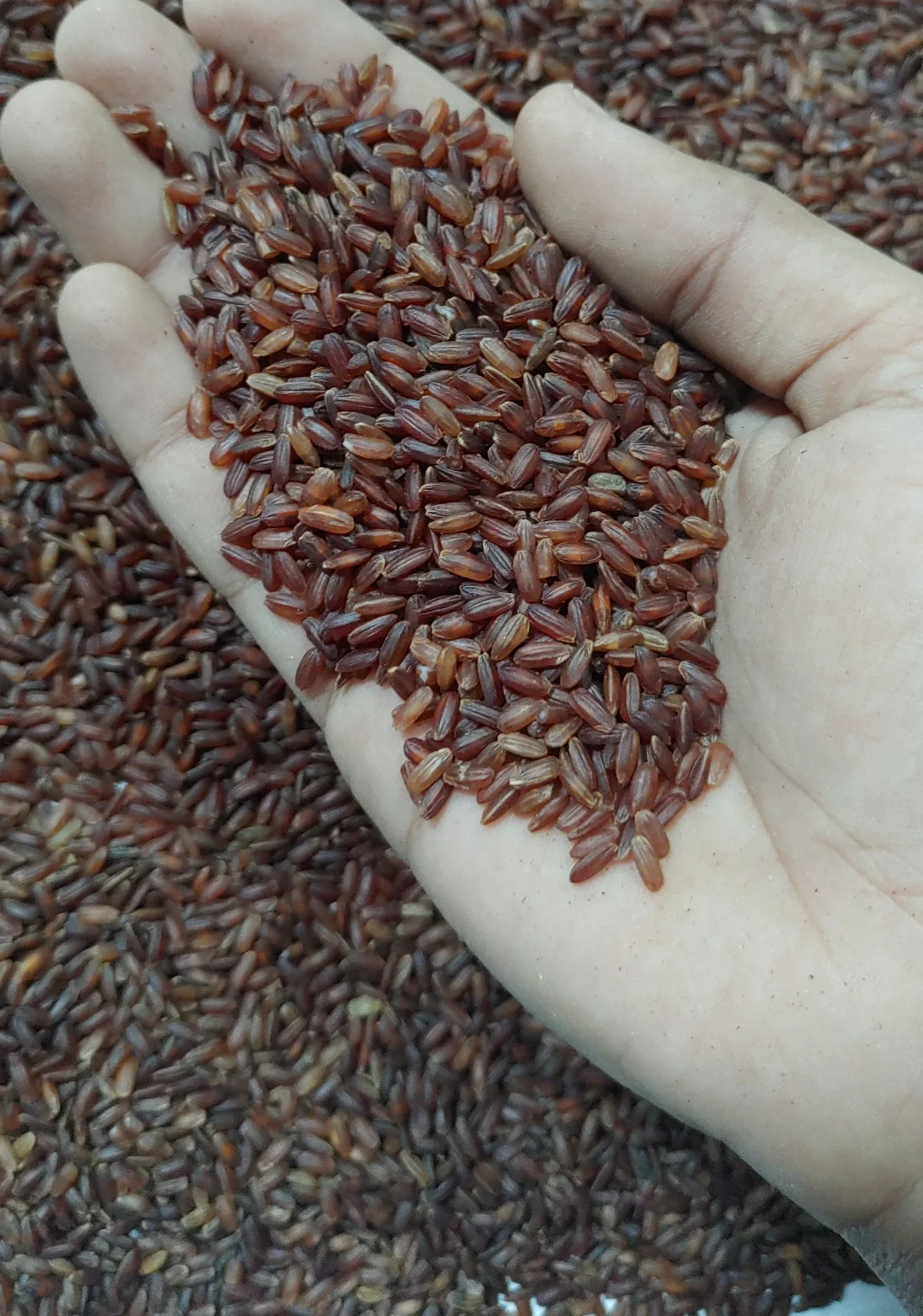


📋 Product Information
 Variety Name Variety Name |
Poongar |
 Rice Age Rice Age |
2 year old |
| 🎨 Color | Natural Red (bran-rich) |
| ⏳ Crop Duration | 95–115 Days |
 Seed Type Seed Type |
Traditional / Indigenous |
 Processing Method Processing Method |
No Polish (Unpolished) |
 Crop Season Crop Season |
Kharif Season |
| 📅 Intake Frequency | Regular (start gradually) |
Poongar
కరుంగురవై · పూంగర్
Tamil Nadu · Red Rice · The Women’s Rice · Siddha Heritage Variety
Called the Women’s Rice by Siddha doctors for centuries — this variety has a unique ability to address conditions that modern medicine struggles to treat. From PCOD and skin diseases to kidney health and fertility, Poongar works at the root of hormonal and cellular health. Peer-reviewed research published in Frontiers in Nutrition and PubMed now confirms what traditional Siddha texts documented long ago.
PCOD / PCOS
Skin Diseases
Anti-Cancer
Kidney Health
Siddha Heritage
“Siddha doctors called this the Women’s Rice. Peer-reviewed research published in Frontiers in Nutrition now confirms its medicinal properties. Traditional households simply called it dinner.”
Siddha Vaidya Heritage · Tamil Nadu
Product Information
| Grain Type | Red Rice · Dark Reddish Grain |
| Other Names | Karunguravai · Karung Kuvai · Poongar |
| Crop Duration | 100–110 Days · Kharif & Rabi |
| Recommended Use | Daily — Both Meals |
| Origin | Tamil Nadu · Siddha Vaidya Tradition |
| Suitable For | Women · PCOD / PCOS · Skin Conditions · Couples |
Origin & Heritage
The Rice That Siddha Doctors Kept for Women
- ›Tamil Nadu native variety — mentioned in Siddha Vaidya and Ayurvedic texts as a specifically feminine medicinal rice, and in Siddha books from the time of Agathiyar as a primary ingredient for skin disease treatment
- ›Peer-reviewed research published in Frontiers in Nutrition (2023) and ScienceDirect confirms its antioxidant potential, anti-inflammatory effects, and antiproliferative properties against cancer cells
- ›Known as the Women’s Rice — search “Poongar Rice” on Google and this is exactly how it comes up
At a Glance
Why This Is Called the Women’s Rice
- ›Siddha doctors specifically identified this variety for women’s hormonal health — it addresses the underlying nutritional deficiencies behind irregular periods, PCOD, and hormonal imbalance
- ›Traditionally used to prevent recurrent miscarriages — regular consumption is linked to uterine strengthening in traditional food systems
- ›For couples trying to conceive — the wife eats Poongar while the husband eats Maa Pelli Samba. Both together address fertility from both sides simultaneously
- ›Red rice — first-time users should begin with 50% Poongar + 50% traditional white rice and gradually increase the Poongar portion, allowing digestion and taste to adjust
Health Benefits
PCOD / PCOS & Hormonal Balance
- ›Siddha texts have documented this variety specifically for women’s hormonal health — it addresses the nutritional deficiencies behind irregular periods and PCOD
- ›A 2023 metabolomics study published in Frontiers in Nutrition (PubMed) confirmed that Poongar and Karunguruvai contain bioactive compounds — including minerals like Zinc, Magnesium, and Iron — that support female hormonal and reproductive health
- ›Best used as a daily food alongside medical advice — this is a traditional food, not a medicine
Skin Diseases & Psoriasis
- ›Documented in Siddha books from the time of Agathiyar as the primary rice ingredient in traditional Siddha medicine for skin diseases
- ›A study published on ScienceDirect specifically analysed Karunguruvai’s chemical composition and found it effective for skin conditions including eczema, psoriasis, and inflammation — it has a natural cooling and anti-inflammatory action on the skin
- ›Traditionally indicated for psoriasis and vitiligo — skin conditions that currently have no permanent allopathy cure
Anti-Cancer & Diabetes
- ›A peer-reviewed study in Frontiers in Nutrition (2023), published on PubMed, found that Karunguruvai contains Calcitriol — a form of Vitamin D that has shown antiproliferative (cancer-slowing) effects on cancer and malignant cells in scientific studies
- ›A review published on ScienceDirect (2022) confirmed that the bioactive compounds in this variety — including polyphenols and phytochemicals — show anticancer, anti-inflammatory, and blood sugar regulating activity
- ›Low glycemic index — safe for diabetics, does not spike blood sugar
- ›Best used as a long-term preventive food for anyone with a family history of cancer — this is a traditional food, not a cancer treatment
Antioxidants, Kidney & Fertility
- ›The Frontiers in Nutrition (2023) study confirmed Poongar and Karunguruvai varieties have been traditionally preferred for their diuretic and anti-inflammatory effects — meaning they support the kidneys in flushing out waste naturally
- ›Rich in Iron, Zinc, and Magnesium — confirmed by the same research — all essential for good blood count, immune health, and reproductive function
- ›Supports uterine health — traditionally linked to prevention of recurrent pregnancy loss in Siddha food practice
- ›For couples trying to conceive — women eat Poongar, men eat Maa Pelli Samba — the complete traditional fertility food combination
How to Get the Most Out of Traditional Rice
One Rice Is Good. All Varieties Together Are Better.
Option 1 — Weekly Rotation
- ›Pick 7 varieties, one for each day of the week
- ›Include Poongar on days when hormonal balance, skin health, or kidney support is the focus
- ›Full spectrum of traditional nutrition in one week
Option 2 — Health-First Choice
- ›PCOD, skin diseases, kidney health, or fertility? Poongar is your pick
- ›Navara for diabetes, Indrani for Vitamin D, Kaala Batti for B12 and antioxidants
- ›One targeted variety eaten daily for focused benefit
Option 3 — All Varieties
- ›Rotate through all available varieties over the month
- ›The traditional way — families never ate just one grain
- ›Maximum benefit from the complete range
Simple rule: Rotate like your grandmother did — different rice, different day. Each variety fills a gap the others leave behind. Together, they work like a complete traditional diet.
How to Cook
Soak Overnight — Minimum 6 to 8 Hours
- ›Red varieties need longer soaking than white rice — never skip this step
- ›Reduces anti-nutrients so your body absorbs the full medicinal benefit of this variety
- ›Softens the grain considerably and improves digestion
Ganji Method — Traditional Recommended
- ›Use 1 cup rice : 8 cups water
- ›Boil and strain the excess starch water (ganji) — do not discard
- ›Store ganji in a clay pot with thin cloth cover — ferment overnight
- ›Drink next morning diluted with thin buttermilk and a pinch of rock salt
Pressure Cooker Least Recommended
- ›Use 1 cup rice : 2 cups water, cook 5 whistles (Adjust the water and cooking time according to your preference).
- ›Convenient but ganji is lost — you miss the probiotic and fermented rice water benefits
Uses & Recipes
Daily Rice & Porridge
- ›Plain rice with sambar, rasam, or any curry
- ›Java (porridge) — particularly nourishing for women during menstrual recovery
Dosa & Idli
- ›Works well in dosa and idli batter
- ›Gives a distinctive colour and flavour to fermented batters
Pittu & Idiyappam
- ›Grind into flour for pittu (Kerala steam cake) — a traditional preparation
- ›Idiyappam (string hoppers) — light and easy to digest
Who Is It For
Women with PCOD / Hormonal Issues
- ›Most effective traditional food recommendation for PCOD
- ›Supports irregular periods, hormonal balance, and uterine health
Skin Disease Patients
- ›Psoriasis, vitiligo, and chronic skin conditions
- ›Works from the inside — addresses nutritional root causes of skin issues
Couples Planning a Family
- ›Wife eats Poongar, husband eats Maa Pelli Samba — the complete traditional fertility combination
- ›Best consumed for 90 days continuously for full benefit
Storage & Care
How to Store
- —Airtight container, cool and dry place
- —Away from moisture and direct sunlight
Found Insects? That Is Actually Good News
- —Insects are attracted only to real, natural food — they confirm your rice is completely free from chemicals, coatings, and preservatives
- —Heavily processed or chemically treated rice never gets insects — because nothing living wants to go near it
- —Simply spread in sunlight for 2–3 hours, clean and use as normal
- —Store with neem leaves or dry chillies to keep them away going forward
Please Note
- —Poongar is a traditional food product, not a medicine
- —Not intended to diagnose, treat, cure, or prevent any disease
- —All benefits are based on traditional Siddha and Ayurvedic food heritage knowledge
- —Individual results will vary — please consult a qualified health professional for medical concerns
The Rice Siddha Doctors Kept for Women.
Now in Your Kitchen.
Traditional · Unpolished · Naturally Grown
| Weight | 1 kg |
|---|---|
| Dimensions | 30 × 18 × 3 cm |
| Breed type | Native (desi) |
| Farming Type | Natural |
| Product Age | 1 year 6 months to 2 years |
| Product Benefits | Hormonal Balance, Pcos, pregnancy and postpartum nutrition |
| suitable rice for particular recipes | Dosa, Idly, Porridge, Rice, Upma |
| Crop Season | Kharif |
Based on 0 reviews
Only logged in customers who have purchased this product may leave a review.
Related products
-

Please login to continue
-
Please login to continue
-
Please login to continue
-
Please login to continue



There are no reviews yet.