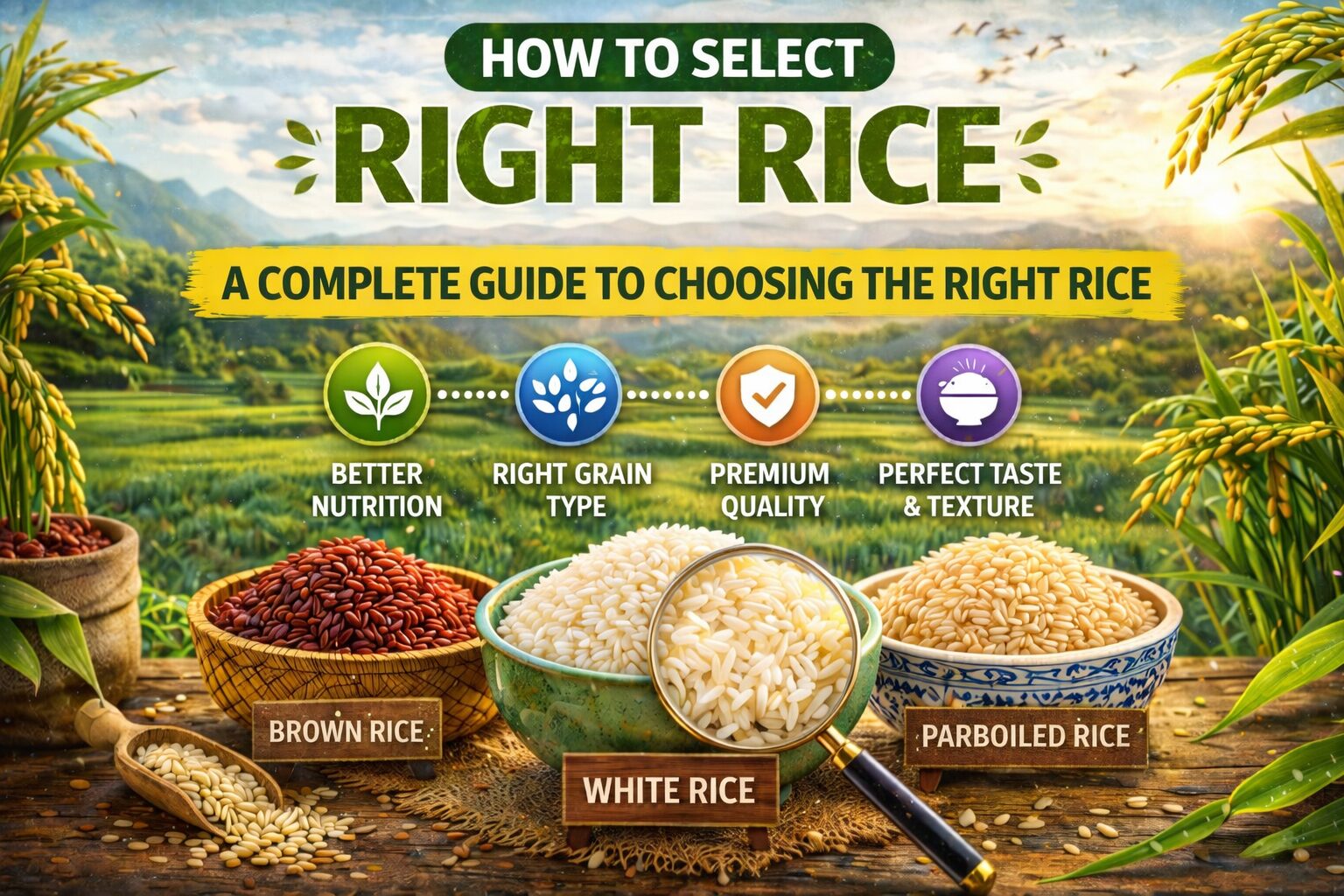
How to Select Good Rice: A Complete Guide to Choosing the Right Rice
 How to Select Good Rice: A Complete Guide to Choosing the Right Rice
Choosing the right rice is one of the most important decisions for your daily food. Most people select rice based, on appearance — white, shiny, long grains — but that is not the right way.
Traditional knowledge suggests that good rice is not about looks, but about how it is grown, processed, and consumed.
 Traditional Rice vs Modern Rice
| Factor | Traditional Rice | Modern/Hybrid Rice |
|---|---|---|
| Growth Time | 120–150+ days | 90–120 days |
| Farming | Natural / Low chemical | Often chemical-supported |
| Amylose | Generally higher | Often lower |
| Amylopectin | Balanced | Often higher |
| Digestion | Slower, steady | Faster |
| Satiety | Long-lasting | Short-lived |
| Eating Quantity | Less needed | More needed |
| Processing | Minimal | Highly polished |
 Amylose vs Amylopectin
Amylose (commonly higher in many traditional varieties) supports slower digestion and longer fullness.
Amylopectin (commonly higher in many modern polished varieties) digests faster and may lead to quicker hunger.
 Choose Rice Based on Your Needs
- Weight management → Black rice (Karuppu Kavuni, Kalabatti)
- Kids nutrition → Light white rice (Mysore Malliga, Sannalu)
- Women’s nutrition → Red rice (Kullakar, Pungar)
- Strength → Mapillai Samba, Bahuroopi
- Antioxidants → Black rice
 1. Choose Traditional Varieties
Always prefer traditional (desi) rice varieties.
Why?
- Passed down through generations
- Naturally adapted to local climate
- Known for better balance in food
Traditional varieties also offer diversity — each type has a purpose.
 2. Crop Duration Matters
 Longer crop duration = better quality
- 120–150+ days → considered better
- Short duration → often designed for yield
Traditional belief suggests long-duration rice develops better internal structure and nutrition.
 3. Seasonal (Kharif) Rice is Preferred
Rice grown in rainy season (Kharif):
- Receives natural rainwater
- Develops under natural conditions
- Often considered better than summer crops
This is why seasonal rice is traditionally preferred.
 4. Natural Farming vs Chemical Farming
Choose rice that is:
- Naturally farmed
- Chemical-free
- Grown in healthy soil
Why?
- Nutrient content may be impacted
- Taste and digestion may change
Traditional farmers focus on balance, not just production.
 5. Don’t Judge by Appearance
White, shiny rice = good rice 
- Highly polished rice loses nutrients
- Slightly broken rice (nooka) is not bad
- Color variations (red, black, brown) are natural
In fact, more natural rice often looks less “perfect.”
 6. Prefer Aged Rice
Traditional advice suggests:
- Use rice stored for at least 1 year
Why?
- Better cooking quality
- Easier digestion
- Improved taste
 7. Cooking Compatibility
Good rice should:
- Cook well in open method
- Release proper ganji
- Not become overly sticky or overly dry
Cooking behavior tells a lot about rice quality.
8. Listen to Your Body
How your body feels after eating matters most
- Do you feel full?
- Do you feel light or heavy?
- Do you need snacks quickly again?
Your body response is the most important indicator.
Final Thought
Selecting rice is not just a buying decision — it is a lifestyle decision.
- You support farmers
- You preserve heritage
- You improve your food quality
 Where to Buy?
You can now buy these precious traditional rice varieties from Deltarice.in a platform, where farmers directly sell to consumers.
 Disclaimer
This content is based on traditional knowledge and general observations. We do not claim any medical benefit or guarantee. It is intended to help you make better food choices.